
Flexible Sigmoidoscopy and the Diagnosis of Diverticular Disease
- posted: Aug. 14, 2024
Diverticulitis causes inflamed pouches to develop throughout the large intestines. You may notice you have abdominal tenderness, fever, nausea, and changes in stool, like constipation or diarrhea, with it. Fortunately, we can manage the condition. But, an accurate diagnosis is necessary, and flexible sigmoidoscopy is one option we offer at Waco Gastroenterology Associates, serving Waco, TX, and the nearby region.
How Commonly We Use Sigmoidoscopy
In most cases, we won't recommend flexible sigmoidoscopy. The first tests are collecting information about your medical history. We'll also ask you questions about your symptoms, including their frequency.
During the initial portion of the testing, we may conduct any of the following:
- Complete blood count (CBC): a blood test to assess the number of white and red blood cells. We can use this information to look for a potential internal GI bleed or infection.
- Stool test: testing your stool for blood and GI infections
- Liver function test: an assessment to rule out other possible causes of your abdominal pain
- Urinalysis: a test we'll use to check for infections
Typically, our next step is a CT scan, short for a computed tomography scan, before we consider sigmoidoscopy. With a CT scan, we can assess for inflammation or an infection.
We may then use sigmoidoscopy further into your treatment to assess the condition's extent. The only time we may recommend a flexible sigmoidoscopy in Waco, TX, first is if you have signs of a lower GI problem, such as rectal bleeding. It's most beneficial if you have an average risk. We should note that you can request this testing if you'd prefer not to have a CT scan or even a coloscopy.
What's a Sigmoidoscopy?
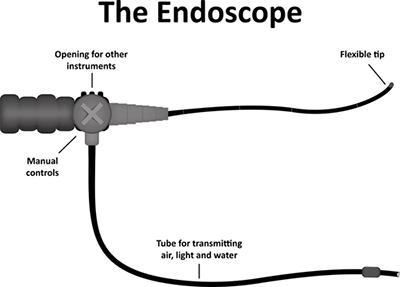
We use this particular testing to check the colon and rectum. It's not as detailed as a CT, but it's a type of imaging. Like with a coloscopy, sigmoidoscopy uses a tube with a tiny camera at the end. Your physician will watch the camera's result on a screen in real time.
This is an imaging test conducted to monitor the colon and rectum for the presence of ulcers, polyps, or other abnormalities by inserting a tube with a camera into the rectum. Unlike a colonoscopy which can examine a larger portion of the intestines, this particular imaging focuses on the sigmoid colon and rectum, which are the lowest portions of the GI tract.
In most cases, at Waco Gastroenterology Associates, serving Waco, TX, and the general vicinity, we won't use this as a first-line diagnostic, though, for some patients, it's the best idea, especially if they don't have a high-risk case and have concerning lower GI symptoms.
Call us at (254) 537-0911 today.
- posted: Aug. 14, 2024
Diverticulitis causes inflamed pouches to develop throughout the large intestines. You may notice you have abdominal tenderness, fever, nausea, and changes in stool, like constipation or diarrhea, with it. Fortunately, we can manage the condition. But, an accurate diagnosis is necessary, and flexible sigmoidoscopy is one option we offer at Waco Gastroenterology Associates, serving Waco, TX, and the nearby region.
How Commonly We Use Sigmoidoscopy
In most cases, we won't recommend flexible sigmoidoscopy. The first tests are collecting information about your medical history. We'll also ask you questions about your symptoms, including their frequency.
During the initial portion of the testing, we may conduct any of the following:
- Complete blood count (CBC): a blood test to assess the number of white and red blood cells. We can use this information to look for a potential internal GI bleed or infection.
- Stool test: testing your stool for blood and GI infections
- Liver function test: an assessment to rule out other possible causes of your abdominal pain
- Urinalysis: a test we'll use to check for infections
Typically, our next step is a CT scan, short for a computed tomography scan, before we consider sigmoidoscopy. With a CT scan, we can assess for inflammation or an infection.
We may then use sigmoidoscopy further into your treatment to assess the condition's extent. The only time we may recommend a flexible sigmoidoscopy in Waco, TX, first is if you have signs of a lower GI problem, such as rectal bleeding. It's most beneficial if you have an average risk. We should note that you can request this testing if you'd prefer not to have a CT scan or even a coloscopy.
What's a Sigmoidoscopy?
We use this particular testing to check the colon and rectum. It's not as detailed as a CT, but it's a type of imaging. Like with a coloscopy, sigmoidoscopy uses a tube with a tiny camera at the end. Your physician will watch the camera's result on a screen in real time.
This is an imaging test conducted to monitor the colon and rectum for the presence of ulcers, polyps, or other abnormalities by inserting a tube with a camera into the rectum. Unlike a colonoscopy which can examine a larger portion of the intestines, this particular imaging focuses on the sigmoid colon and rectum, which are the lowest portions of the GI tract.
In most cases, at Waco Gastroenterology Associates, serving Waco, TX, and the general vicinity, we won't use this as a first-line diagnostic, though, for some patients, it's the best idea, especially if they don't have a high-risk case and have concerning lower GI symptoms.
Call us at (254) 537-0911 today.
Main Location
364 Richland West Cir.,
Suite A,
Waco, TX 76712
Office Hours
Monday
8:00 am - 5:00 pm
Tuesday
8:00 am - 5:00 pm
Wednesday
8:00 am - 5:00 pm
Thursday
8:00 am - 5:00 pm
Friday
8:00 am - 5:00 pm
Saturday
Closed
Sunday
Closed